How Legacy Software Modernization Helps Businesses Stay Competitive in 2026
Many businesses still rely on software systems that were developed years—or even decades—ago. While these systems may continue to function, they often struggle to meet modern business requirements.
Legacy applications can become expensive to maintain, difficult to integrate, and vulnerable to security threats. They also limit an organization’s ability to innovate and respond to changing market demands.
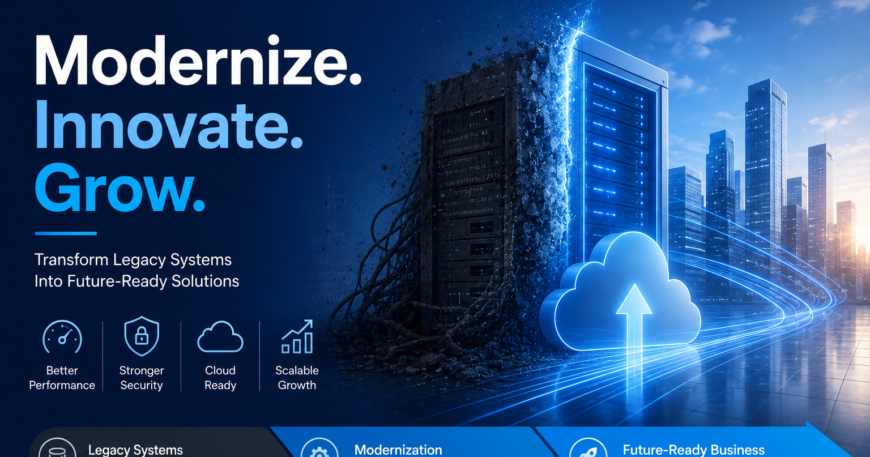
In 2026, businesses are increasingly investing in legacy software modernization to improve performance, strengthen security, and support future growth.
Modernization allows organizations to retain valuable business processes while upgrading the technology that powers them.
What Is Legacy Software Modernization?
Legacy software modernization is the process of updating older applications, platforms, and systems to align with modern technology standards.
This may involve:
- Updating application architecture
- Migrating to cloud environments
- Improving user interfaces
- Replacing outdated technologies
- Enhancing security frameworks
- Integrating modern APIs
The goal is to extend the value of existing systems without completely rebuilding from scratch unless necessary.
Why Legacy Systems Become a Problem
As technology evolves, older systems often create operational challenges such as:
- Slow performance
- Security vulnerabilities
- High maintenance costs
- Limited scalability
- Poor user experience
- Integration difficulties
These limitations can impact productivity, customer satisfaction, and business growth.
Organizations that delay modernization often find themselves falling behind competitors that embrace newer technologies.
Benefits of Legacy Software Modernization
Improved Performance
Modernized applications operate faster and more efficiently, improving both employee productivity and customer experiences.
Enhanced Security
Updating legacy systems helps address known vulnerabilities and supports modern security practices.
Better Scalability
Modern applications can scale more effectively as business requirements evolve.
Reduced Maintenance Costs
Businesses spend less time and money supporting outdated technologies.
Improved User Experience
Modern interfaces make applications easier to use and increase employee adoption.
Real-World Example
Consider a manufacturing company using an outdated inventory management platform built more than ten years ago.
The system lacks real-time reporting, mobile accessibility, and integration capabilities.
After modernization, the company gains cloud access, automated reporting, and seamless integration with ERP and supply chain systems.
The result is better visibility, improved efficiency, and reduced operational costs.
Industries Benefiting from Modernization
Healthcare
Modernizing patient management and healthcare administration systems.
Finance
Improving security, compliance, and transaction processing capabilities.
Manufacturing
Enhancing production management and operational visibility.
Retail
Upgrading inventory and customer engagement platforms.
Logistics
Improving shipment tracking and supply chain management systems.
Legacy Modernization Trends in 2026
Cloud-First Transformation
Businesses are moving legacy applications to cloud-native environments.
API-Driven Architectures
Organizations are enabling seamless connectivity through modern integrations.
AI Integration
Businesses are embedding AI capabilities into modernized platforms.
Microservices Adoption
Companies are replacing monolithic systems with flexible microservices architectures.
Enhanced Cybersecurity
Security modernization is becoming a key driver for application upgrades.
Common Modernization Mistakes
Businesses should avoid:
- Modernizing without a clear roadmap
- Ignoring business requirements
- Underestimating data migration complexity
- Neglecting employee training
- Focusing only on technology instead of business outcomes
Successful modernization projects balance technical improvements with organizational objectives.
How ThinkDebug Helps
ThinkDebug helps organizations modernize legacy applications while minimizing risk and disruption.
Our services include:
- Legacy Application Assessment
- Software Modernization Strategy
- Cloud Migration
- API Integration
- UI/UX Modernization
- Performance Optimization
- Ongoing Support & Maintenance
We help businesses transform aging systems into modern platforms that support innovation and growth.
Conclusion
Legacy software may have supported business operations for years, but outdated technology can become a barrier to growth.
Organizations that invest in software modernization gain improved performance, stronger security, better scalability, and enhanced user experiences.
In 2026, modernizing legacy systems is not simply a technology upgrade—it is a strategic investment in future business success

