


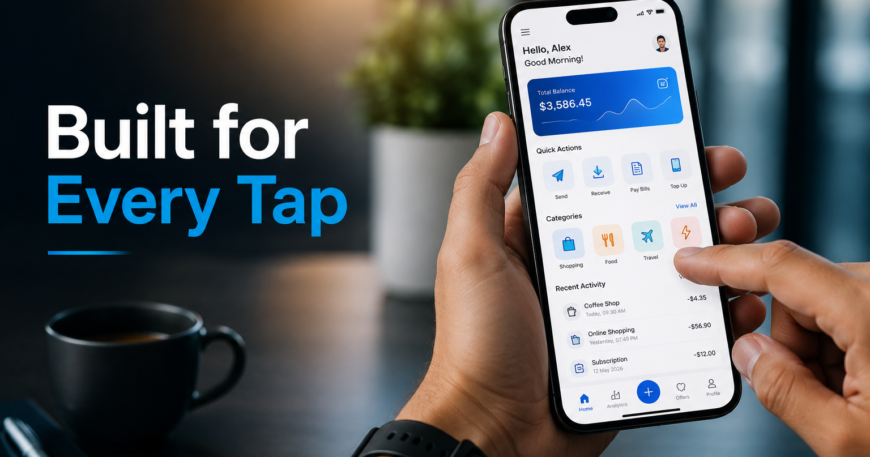
Why Mobile App Development Is Becoming a Competitive Advantage for Businesses in 2026
A decade ago, having a website was enough for most businesses to establish an online presence. Today, customer expectations have evolved dramatically. People expect businesses to be accessible instantly, provide personalized experiences, and offer seamless interactions across every touchpoint.
This shift has made mobile applications one of the most valuable digital assets a business can invest in.
From customer engagement and brand loyalty to operational efficiency and revenue growth, mobile apps are helping businesses create stronger relationships with their customers while gaining a significant competitive advantage.
The businesses leading their industries in 2026 are not simply selling products or services. They are creating digital experiences that customers want to return to repeatedly.
Why Mobile Apps Matter More Than Ever
Consumers spend a significant portion of their digital time on mobile devices.
Whether they are shopping, booking appointments, tracking deliveries, accessing services, or communicating with brands, mobile devices have become the primary gateway to digital interactions.
While responsive websites remain important, mobile applications offer capabilities that websites cannot fully replicate.
These include:
- Faster user experiences
- Personalized content
- Offline functionality
- Push notifications
- Enhanced security
- Better customer engagement
Businesses that fail to embrace mobile-first experiences risk losing customers to competitors that offer greater convenience.
The Real Business Benefits of Mobile Apps
Many business owners mistakenly view mobile apps as a branding exercise.
In reality, mobile applications directly contribute to business growth.
Improved Customer Retention
Acquiring a customer is expensive.
Retaining them is far more profitable.
Mobile applications create ongoing engagement through personalized experiences, loyalty programs, exclusive offers, and direct communication.
Customers who regularly interact with a business through a mobile app are more likely to remain loyal over time.
Higher Customer Engagement
Unlike websites, mobile apps provide direct access to users through push notifications.
Businesses can instantly communicate:
- New product launches
- Special promotions
- Service updates
- Appointment reminders
- Personalized recommendations
This consistent engagement helps businesses stay top-of-mind.
Better User Experience
Speed and convenience play a major role in customer satisfaction.
Mobile applications are designed specifically for smartphones, providing smoother navigation, faster loading times, and more intuitive interactions.
A better user experience often translates into higher conversion rates.
Valuable Customer Insights
Mobile apps generate data that helps businesses understand:
- Customer behavior
- Purchasing patterns
- Engagement trends
- User preferences
These insights enable businesses to make smarter marketing and operational decisions.
Industries Benefiting Most from Mobile Apps
While nearly every industry can benefit from mobile applications, some sectors are experiencing particularly strong results.
Healthcare
Patients can schedule appointments, access records, and communicate with providers more efficiently.
Education
Learning platforms offer students convenient access to courses, assignments, and educational resources.
Retail and E-Commerce
Businesses can create personalized shopping experiences and improve customer retention.
Logistics
Real-time tracking and automated notifications improve customer satisfaction and operational efficiency.
Professional Services
Mobile applications simplify communication, project management, and client interactions.
Mobile App Trends Shaping 2026
Technology continues to evolve rapidly.
Several trends are influencing mobile app development strategies.
AI-Powered Personalization
Applications are increasingly using artificial intelligence to deliver personalized recommendations and experiences.
Voice Search Integration
Voice-enabled functionality is becoming a standard feature for many business applications.
Enhanced Security
As cyber threats evolve, mobile apps are adopting stronger authentication and security frameworks.
Cloud-Powered Applications
Cloud integration improves scalability, performance, and accessibility.
Cross-Platform Development
Businesses are increasingly investing in solutions that work seamlessly across Android and iOS platforms.
Common Mistakes Businesses Make
Many organizations launch mobile apps without a clear strategy.
Common mistakes include:
- Building unnecessary features
- Ignoring user experience
- Failing to integrate business systems
- Neglecting performance optimization
- Lack of ongoing maintenance
Successful mobile applications are built around customer needs and business objectives rather than trends alone.
How ThinkDebug Helps
ThinkDebug develops custom mobile applications designed to support business growth, improve customer engagement, and streamline operations.
Our services include:
- Android App Development
- iOS App Development
- Cross-Platform App Development
- Enterprise Mobile Applications
- UI/UX Design
- API Integration
- App Maintenance and Support
We focus on creating scalable, secure, and user-friendly applications that deliver measurable business value.
Conclusion
Mobile applications are no longer optional for businesses seeking sustainable growth.
They have become powerful tools for customer engagement, retention, and operational efficiency.
Organizations that invest in strategic mobile app development today will be better positioned to meet customer expectations, strengthen brand loyalty, and remain competitive in an increasingly mobile-first world.

