01
Automated tools find a fraction of it
Scanners catch perhaps a third of real barriers. Focus order, misleading labels and keyboard traps need a human and a screen reader.
Practical deep dives on software architecture, AI systems, and scaling digital products - drawn from the work we ship.
Screen-reader-first interfaces and products designed with blind and low-vision users.
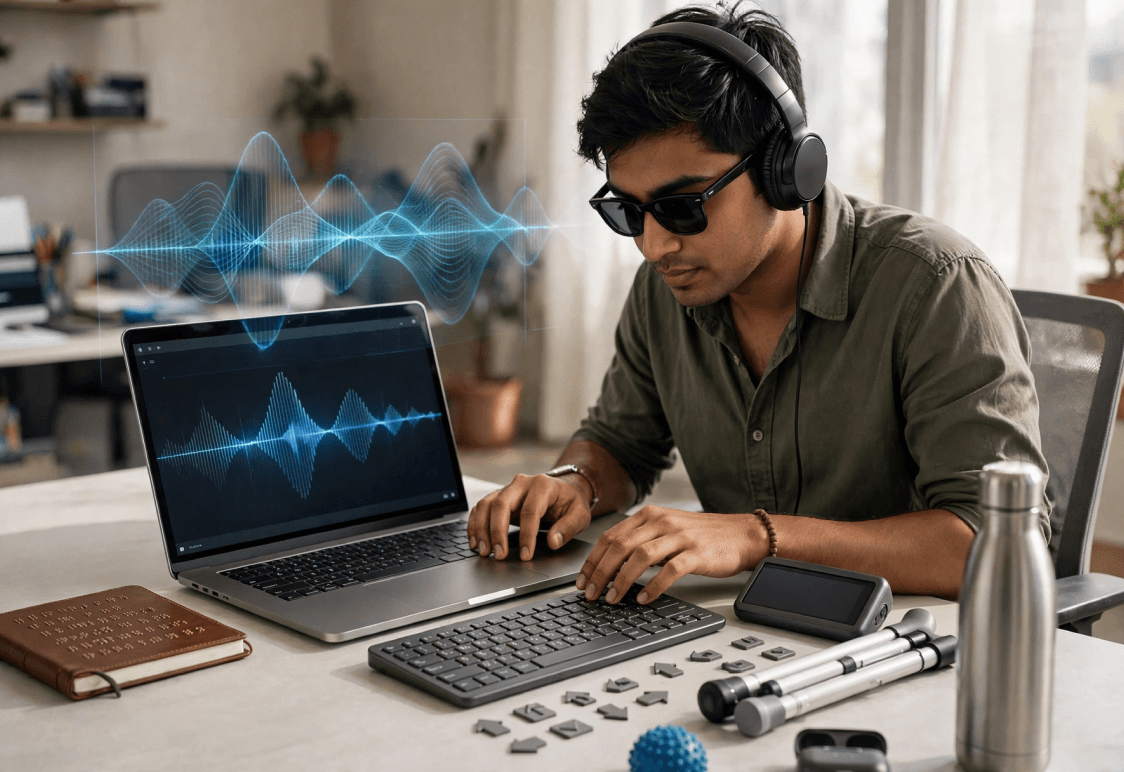
We build accessible products and assistive technology: screen-reader-first interfaces, remediation of existing products, design systems with accessibility built into the components, and tools designed specifically for disabled users.
Accessibility work divides cleanly into two jobs, and conflating them is why most programmes stall. Remediating an existing product is a bounded engineering exercise with an audit at the end. Building accessibly is a change to how components, design and QA work, and it is the only one that stops the problem recurring.
The other thing worth saying plainly: an automated scanner finds perhaps a third of real barriers. The rest - focus order that makes no sense, labels that lie, a modal that traps a keyboard user - only surface when someone uses the product the way assistive technology actually works.
The constraints that shape every build in this sector, and the ones teams usually meet too late.
Scanners catch perhaps a third of real barriers. Focus order, misleading labels and keyboard traps need a human and a screen reader.
Fixing an existing product is bounded work. Stopping the problem recurring is a change to design, components and QA.
Accessibility added late touches every component and every page, which is why it is repeatedly deferred and repeatedly expensive.
Public sector duties, the European Accessibility Act and litigation in several markets all raise the cost of doing nothing.
JAWS, NVDA, VoiceOver and TalkBack behave differently, and testing against one proves little about the others.
A product can pass an audit and still be miserable to use, which is the outcome that actually matters.
Swipe to read all 6
Each one is a system we have built before, not a capability we are willing to try.
Manual and assistive-technology testing with a prioritised, costed fix plan.
Component libraries where keyboard, focus and semantics are correct by default.
Products designed around assistive technology rather than adapted for it.
The documentation regulators and procurement teams ask for.
Automated checks in the pipeline so regressions are caught before release.
Purpose-built tools for disabled users rather than accommodations to a mainstream product.
Engagements across sectors - the same team, the same standards.
Partnering with Thinkdebug to develop the Forever 52 mobile app has been a game-changer for us. They were always open to feedback, and it was clear they were as invested in our success as we were. What really sets them apart, though, is the amazing support we've received since the app launched. They’ve made sure the app continues to run smoothly and are always ready to fix any issues that come up.DMDhruv MehtaBusiness Head, Forever 52
Chosen for fit and long-term maintainability, never for novelty.
Send us the scope and we come back with an itemised estimate - no discovery fee, no obligation.
What we design and document against, from the first commit rather than the week before an audit.
Certification itself belongs to your entity and its assessor. What we provide is software built and documented so the assessment is about evidence rather than remediation.
Most of our work comes from clients we already shipped for. These are the reasons they give.
NVDA, JAWS, VoiceOver and TalkBack behave differently, so we test against them rather than trusting a scanner's score.
Remediation lands in the component library and the QA process, so the same barriers do not return in the next release.
Automated checks run on every pull request, because accessibility regressions are cheap to prevent and expensive to rediscover.
Passing an audit is the floor. We judge the work by whether the journey is actually completable with assistive technology.
Statements, conformance reports and test records produced in the form regulators and buyers ask for.
We are explicit that scanners find a minority of barriers, so nobody mistakes a green dashboard for an accessible product.
Let's start with you.
Your information stays private. We reply within 24 hours.
Still have a question we have not answered?
Ask an engineerWhat we build for accessibility & assistive tech, the work we have shipped, and what we have written about it.


